A Moroccan wedding usually lasts three days, with a hammam for the bride and henna on her hands and feet.
The wedding is one of the most entrenched rituals within the culture of Islamic countries such as Morocco. The marriage ceremony in the Arab world has, however, undergone a process of simplification and westernization, which has failed to break the essence of this type of celebration.
How long a Moroccan wedding lasts
Moroccan weddings tend to last, at present, for three days. In other times it was usual for them to last about a week. The decoration with henna of the hands and feet of the bride, the purification of the bride, the golden embroidery on the garments and the spices present in the different dishes are some of the peculiarities of the marriage in Morocco.
Day one: the hammam
During the first day of the ritual, the bride spends the day in the Hammam. There she relaxes and purifies herself, before being escorted by her friends to her room, where she dresses up in traditional Moroccan Kaftan and does her make up in preparation to celebrating the bachelorette party.
Islamic Marriage is a sacred and special bond that ties not just two people, but two families.
Day two: the family meal and henna
On the second day, a great family meal takes place. Passages of the Koran are tattooed on the bride’s body temporarily using Henna and she is smeared with natural beauty products. It is a way to bless future marriage and have the bride look the best she can for her special night.
Day three: the Moroccan wedding celebration
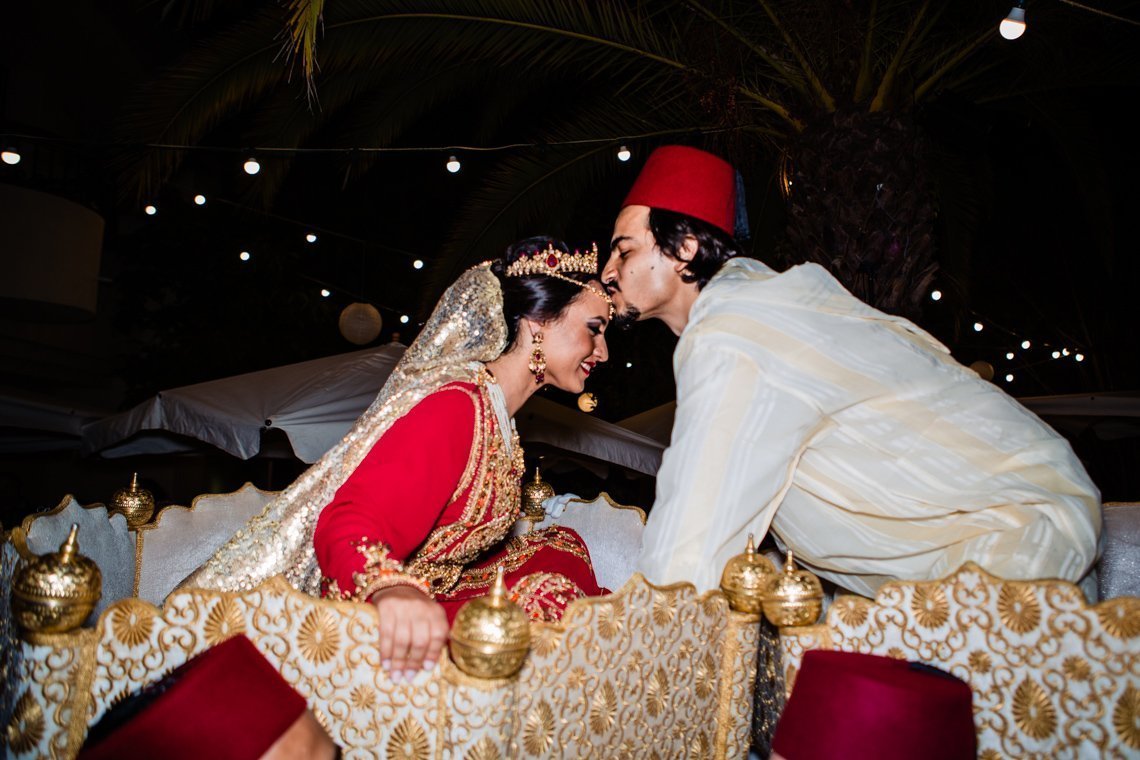
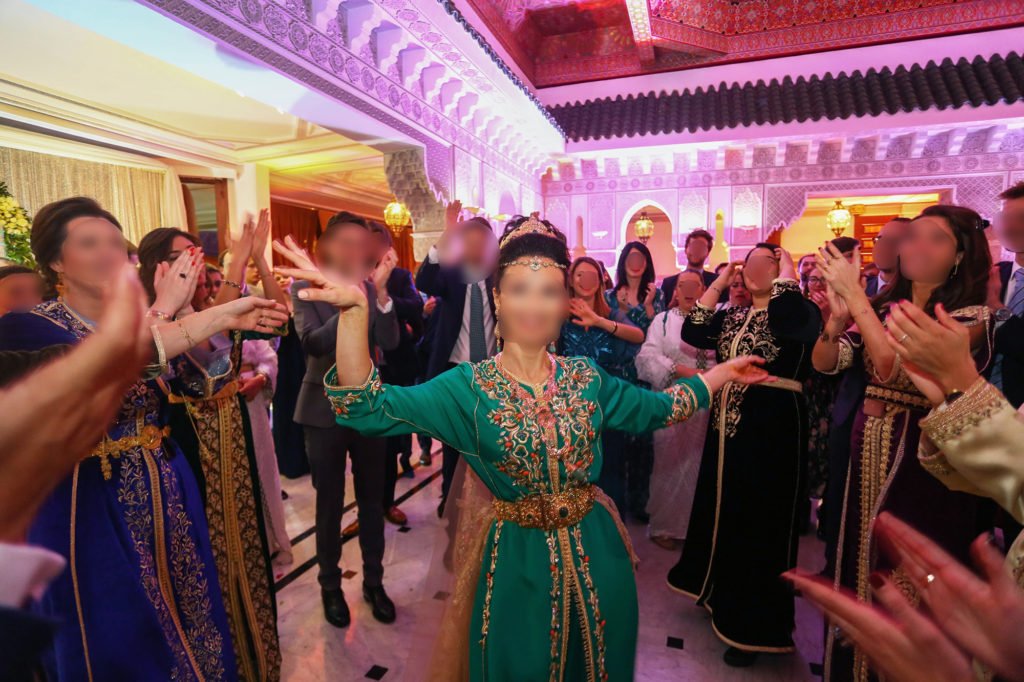
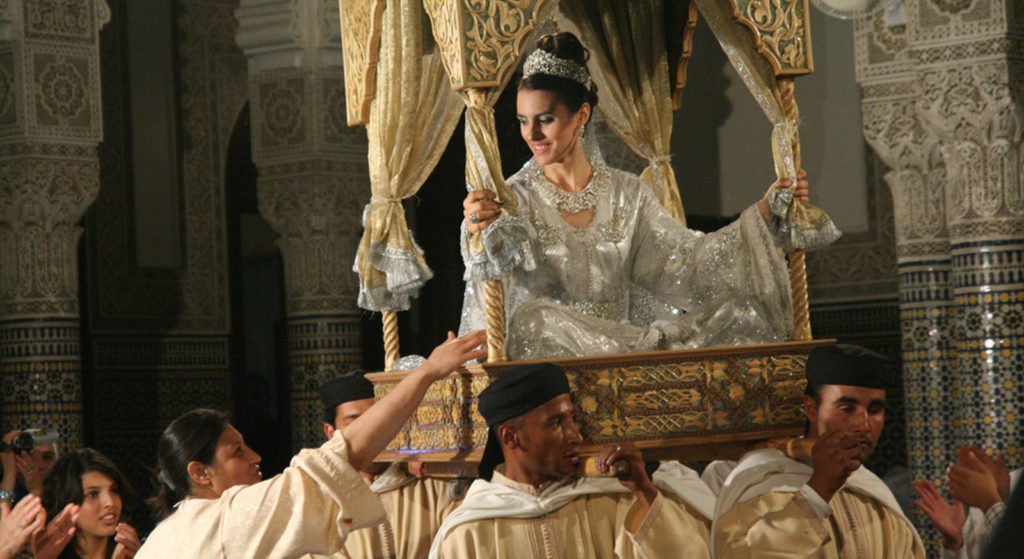
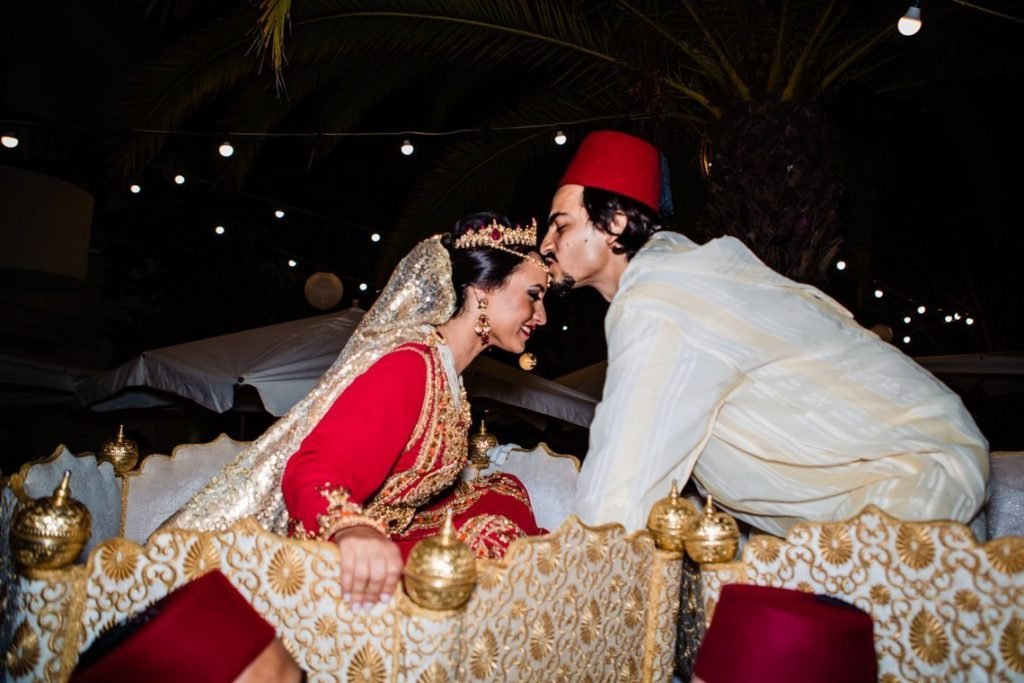
The third day is the main celebration itself. The friends of the groom move the bride to the house of her in-laws, there the groom reads the Koran, kisses the bride on the forehead and begins the wedding night. The bride, dressed in gala, enters the room in a carriage carried by four men, dancing to the rhythm of Moroccan traditional music, as in a “Issawa” group or a Drum folklore. Guests eat dates and drink milk, as a symbol of purification and good luck. Throughout the night, candies, sweats and tea are given to the guests, while all dancing and enjoying the live music. By the end of the night, the guests and families have dinner and enjoy the last dance of bride and groom.
The hospitality of the people of Morocco and the symbolism are noticeable during every day of celebration. Thus, family and friends leave the doors of their homes open, to signify the welcome to all. In addition, sweets are served in a single source, as a manifestation of family unity.